
Tag Archives: Felony

restraining order

Domestic Violence Divorce: How Abuse Charges May Affect Your Separation

Washington State treats all domestic violence accusations as serious matters. In part due to the strict enforcement of legal measures against alleged perpetrators, and in part due to Washington State’s broad definition of what domestic violence is, individuals who find themselves facing a charge or allegation of domestic violence might not know where to turn.
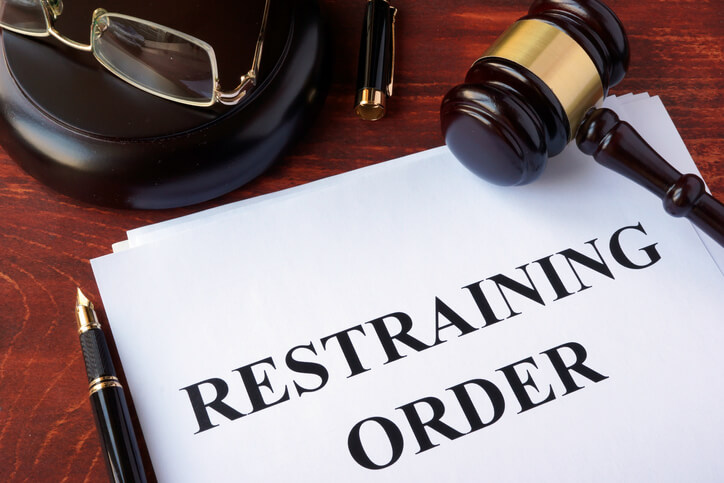
Restraining Order Divorce and Separation

In Washington State, domestic violence is defined by the legislature as either physical or emotional harm as well as stalking. Due to the broad definitions of the law, someone stating that they are fearful of you can potentially be enough to warrant a legal accusation of domestic violence.

If someone alleges they are afraid of you, the process of achieving an order of protection can begin. In Washington, all an individual needs to obtain a preliminary protective order is an allegation of abuse. After a temporary order is issued, a hearing date will be scheduled for both parties to present their facts. It’s very important, if you find yourself the subject of a temporary restraining order, to attend your hearing and present your evidence that you are innocent. Once a protective order is granted, it can be for any set duration of time, according to the Judge’s ruling.

During this time, you are legally barred from contacting the victim, going within a specified distance of the victim and owning any firearm, even if they were legally owned by you prior to the issuance of a protective order. Protective orders, by effect, can remove you from your home, limit your contact with your children and potentially cause you to lose your professional position if your employment requires the use of a firearm.

The other three recognized divisions of domestic violence in Washington are sexual abuse, economic control, and neglect. Combined with the passing of in VAWA 1994, a federal law that has implications to each state within the United States regarding how to process any claim of domestic violence, more individuals are seeing financial and emotional repercussions following a claim made against them. Under VAWA, any individual granted a restraining order in one state is guaranteed that the restraining order will be upheld in any state for the lifetime of the order. The provisions in the VAWA has also lead to the advent of ‘mandatory arrest’ states, where an alleged perpetrator of domestic violence is arrested based solely on the alleged victim’s claim prior to investigation.

In Washington, law enforcement officers are required to make an arrest if they have probable cause an incident of domestic violence occurred, as well as if someone has violated a no-contact or civil protection order. Once an arrest occurs and charges are filed, only the prosecutor can drop the case. Washington classifies domestic violence severity by three levels: misdemeanor ( up to 90 days in jail and a $1,000 fine), gross misdemeanor ( up to 365 days in jail and a $5,000 fine), and felony (one year or more in jail.) In addition to financial sanctions and jail time, individuals can be forced to attend batterer intervention classes, anger management therapy, or even pay financial restitution to their victims. The financial aspects of any of these measures are expected to be paid by the person who is an alleged abuser.

The potential impact of a domestic violence charge does not end with personal criminal records. In Washington, a divorce judge may take a charge of domestic violence into consideration when making decisions regarding child custody, maintenance payment allocation, and asset division. Washington also funds programs designed to aid domestic violence victims in navigating family court. While you will be required to pay for your own legal representation, your opponent will be able to take advantage of legal aid, and assistance free of charge. Even if your domestic abuse allegation does not rise to the level of legal prosecution, you may be ordered into parenting classes, personality tests, alcohol, and drug screenings or supervised visitation with your children while your case is being heard in court.

To err on the side of caution, most judges, when domestic violence is alleged they may issue at minimum a no-contact order between the parties and require the accused party to vacate the residence. As continuity in children’s lives is a universal factor in determining custody through divorce proceedings, you may be placed at a disadvantage for obtaining primary custody in your divorce in this instance.

With a better understanding of the expansive impact, domestic violence can have on your personal and professional life, it’s clear that you need a competent attorney to represent you. Leyba Defense is prepared to help you. Our team of professional, knowledgeable attorneys can help you navigate the tricky legal field to reduce or dismiss a domestic violence accusation. Contact us for a consultation with one of our experts in the field of defensive law.


parents arguing near child

Domestic Violence Charges: Felony or Misdemeanor?

Domestic violence. It’s a term that typically brings a lot of different images to mind—some truthful, but many of them shrouded in misconceptions. While we hope that you never have to deal with a charge like domestic violence, if you’re reading this then it’s likely that you’re either being charged, or you might be facing charges in the future. As such, you probably want to know more about exactly what DV is, and how charges like these could affect your future. Read on to find out more about domestic violence and the options you may have.

Domestic Violence Attorneys Felony or misdemeanor

Is Domestic Violence a Felony?

Without a doubt, one of the main questions people have when they are first charged with DV is whether or not domestic violence is a felony. Since this can seriously affect what sort of punishment you might be facing later, it is definitely important to understand the difference.

Typically, a domestic violence case can be charged as one of two things—a felony, or a misdemeanor. There’s no easy, clear-cut way to know which is which. It all depends on two main factors: the specific circumstances of the incident, and the criminal history of the suspect.

Misdemeanor Domestic Violence

A domestic violence charge might be considered a misdemeanor if the incident and overall damage are considered negligible. Misdemeanor domestic violence incidents can involve things like verbal abuse, simple assault (where a victim is pushed or struck but suffers no damage) or a restraining order violation—if it’s the first offense.

Misdemeanors are less serious than felonies, and the resulting punishment is also less. What’s more, misdemeanor charges are split into two groups—misdemeanors and gross misdemeanors. Usually, a misdemeanor carries with it a maximum jail sentence of fewer than 90 days and a possible fine of up to $1,000. Gross misdemeanors are a little more serious and can get you a year in jail and a maximum fine of $5,000. While misdemeanors still stay on your permanent record, they are much less serious than felonies and do not automatically strip you of legal privileges like a felony conviction can.

Felony Domestic Violence

On the other hand, a more serious domestic violence incident can, depending on circumstances, be charged as a felony. There are many situations where this can happen, including (but not limited to) serious bodily harm or death, violence inflicted on a child, the use of a deadly weapon, acts of a sexual nature, or repeated violations of a restraining order.

Just as the charges for a felony involve crimes of a more serious nature, the punishments that go with a felony are more serious, as well. In Washington, felonies can be further broken down into three classes, class A, class B, and class C. Class C felonies are the least serious of the felony classes and bring with them possible penalties of $10,000 and up to five years in prison. Class B felonies are a step up and can get you a maximum of 10 years in prison and up to $20,000 in fines. Class A felonies, then, are the most serious class of felonies. If you are charged and found guilty of a class A felony, this can get you life in prison, and a possible $50,000 fine, as well.

Previous Criminal History

Just like the weight of your current offense can help determine whether or not you are facing misdemeanor or felony charges, your previous history will affect this as well. If, for example, you are charged with violating a restraining order, this is considered a misdemeanor offense—if it’s the first time. If, however, you have a history of violating these legal barriers, the prosecutor can choose instead to lobby a felony charge instead.

More serious charges can also be filed if you have a history of violence, or if you are a repeat offender who frequently finds yourself in front of the bench.

Alternative Sentencing

If you are facing felony charges, but it’s your first time being charged with a serious crime, the state of Washington has been known to allow a court to consider alternative sentencing. One sentencing alternative is the First Time Offender Waiver or FTOW. The FTOW allows first-time felony offenders who qualify to serve only 90 days in prison, and the other six or twelve months in community custody (aka “probation”). The actual conditions vary on a case-by-case basis and are determined by the judge.

How We Can Help You

If you find yourself facing domestic violence accusations—misdemeanor or felony—then you need experienced legal help in your corner. The attorneys at Leyba Defense know the domestic violence laws in Washington and are ready to work for you to overcome these charges, get them reduced, or see if you can qualify for an alternative sentencing program. Need help? Contact us at Leyba Defense today!